
Travel habits continue to change — and with them, the way travel insurance is delivered, integrated, and presented within the booking journey is changing too.
Customers are booking trips differently than they were just a few years ago. From shorter breaks and multi-destination itineraries to experience-led holidays and increasingly digital booking journeys, expectations around flexibility, speed, and convenience continue to grow.
Recent research from ABTA highlights continued confidence in travel demand, alongside changing customer expectations around how holidays are researched, booked, and experienced. According to the latest ABTA Holiday Habits 2025–26 report, holidays remain a priority purchase for many UK travellers despite ongoing economic pressures.
For travel partners, this means that travel insurance must adapt alongside changing travel behaviours — not only in terms of the cover available, but also how it is introduced, accessed, and integrated within the wider customer experience.

Travel Behaviour Is Continuing to Change
Modern travel booking behaviour is increasingly flexible, digital, and experience-led.
Today’s travel landscape includes:
- Shorter and more frequent trips
- Multi-destination itineraries
- Experience-led holidays
- Flexible and last-minute bookings
- Blended travel combining different types of trips or activities
Customers are also increasingly comfortable managing the entire booking journey digitally, expecting fast and connected experiences throughout the process.
Recent reporting from ABTA Travel Trends and ABTA Destinations to Watch 2025 highlights growing interest in experience-led travel, multi-destination itineraries, cruises, adventure holidays, and increasingly personalised travel experiences.
As travel behaviour changes, expectations around how travel insurance is presented and delivered continue to evolve alongside it.

Customers Expect More Seamless Booking Experiences
Booking journeys across the travel industry have become increasingly streamlined.
Customers now expect:
- Fast and intuitive checkouts
- Connected digital experiences
- Minimal disruption during booking
- Clear information presented at the right time
This has influenced how travel insurance is integrated within booking journeys.
Rather than existing as a separate or disconnected process, travel insurance is increasingly embedded naturally within the wider booking experience — alongside other travel-related options such as luggage, transfers, or seating upgrades.
This helps create a smoother and more consistent customer journey.
More Complex Trips Create Different Considerations
Travel itineraries are often more varied and flexible than in the past.
Customers may now combine:
- Multiple destinations within one trip
- Different transport methods
- Cruise and stay itineraries
- Adventure or activity-based travel
- City breaks combined with longer holidays
While travel insurance remains relevant across all types of travel — including traditional short-haul holidays — increasingly varied itineraries can create additional considerations around how insurance options are presented, selected, and understood during the booking process.
This reinforces the importance of providing clear and accessible information throughout the customer journey.
Digital Booking Journeys Continue to Shape Expectations
The growth of digital booking platforms has significantly influenced customer expectations around speed, accessibility, and convenience.
Customers increasingly expect:
- Real-time responses
- Seamless integrations
- Fast pricing and clear options
- Consistency across devices and channels
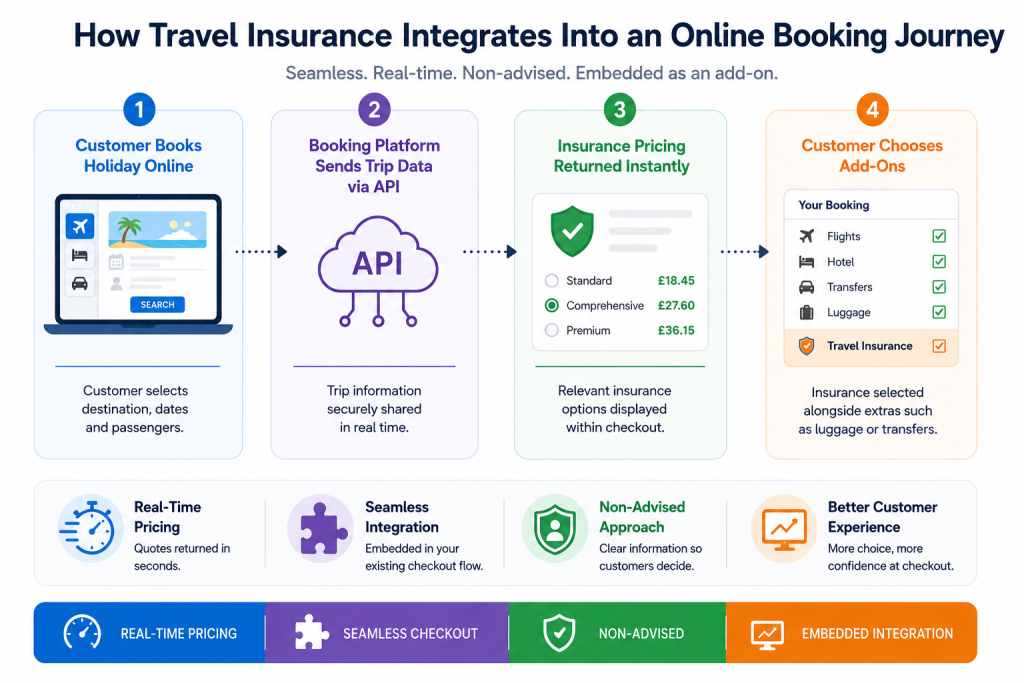
API-driven integrations increasingly support the delivery of travel insurance within modern booking journeys, allowing relevant options and pricing to be returned instantly based on trip details entered during the booking process.
This supports a smoother booking experience without requiring customers to leave the platform or complete separate processes.
Retail and Adviser-Led Travel Remain Important
Despite continued growth in digital booking journeys, retail and adviser-led travel continue to play an important role within the industry.
Many customers still value:
- Human interaction
- Reassurance during the booking process
- The ability to ask questions and discuss travel plans
Recent ABTA Holiday Habits research reported increased numbers of customers continuing to book through travel professionals, with reassurance and support remaining key reasons for choosing adviser-led travel.
Within these environments, travel insurance continues to play an important role as part of the wider booking conversation.
Structured systems, integrated pricing, and consistent communication all help support efficient and reliable booking experiences for both customers and travel agents.

Flexibility Matters for Travel Partners
Travel businesses operate across a wide range of booking models and customer journeys.
Some partners operate entirely online, while others combine:
- Retail branches
- Telephone sales
- Adviser-led bookings
- Digital booking platforms
As travel trends continue to evolve, flexibility becomes increasingly important.
Travel insurance solutions must be able to support:
- Different booking environments
- Different customer journeys
- Different trip types and travel behaviours
- Consistent experiences across channels
This helps ensure that insurance can be delivered naturally and efficiently regardless of how customers choose to book.
Supporting Customer Understanding
As booking journeys become more connected and fast-paced, maintaining clarity remains essential.
Customers should be able to:
- Review insurance options clearly
- Understand key product information
- Access policy documentation easily
- Make informed decisions based on their own needs
Providing information in a way that is clear, consistent, and accessible helps support both customer understanding and confidence throughout the booking journey.
Customers should always review policy documentation carefully to ensure the cover meets their individual needs.
Supporting a Non-Advised Approach
Travel insurance is commonly offered on a non-advised basis, meaning customers are provided with information to support their decision-making, rather than receiving a personal recommendation.
As booking journeys continue to evolve, maintaining this approach remains important across both digital and adviser-led environments.
This includes:
- Presenting options clearly and consistently
- Avoiding language that could imply recommendation or advice
- Supporting informed customer decision-making
- Ensuring information is presented clearly, consistently, and transparently
As a business regulated by the Financial Conduct Authority, supporting these principles remains an important part of how travel insurance is delivered within modern booking journeys.
Why This Matters for Travel Partners
Changing travel trends influence not only how customers book travel, but also how travel partners deliver the overall booking experience.
When travel insurance is integrated effectively within evolving booking journeys, it can help:
- Support customer confidence
- Maintain efficient booking flows
- Deliver consistent experiences across channels
- Reduce operational friction
- Support regulatory expectations
This applies across all types of travel — from traditional package holidays and short breaks through to more complex itineraries and experience-led travel.
For travel partners, adapting to changing travel behaviour is no longer simply about responding to trends — it is about supporting booking journeys that continue to feel connected, efficient, and customer-focused as expectations evolve.
Adapting to a Changing Travel Landscape
Travel continues to evolve, shaped by changing customer expectations, digital booking behaviour, and increasingly flexible travel patterns.
As these trends continue to develop, travel insurance must evolve alongside them — supporting connected customer journeys that feel clear, consistent, and easy to navigate.
As travel expectations continue to evolve, travel insurance increasingly forms part of a wider connected booking experience — supporting customer confidence, operational efficiency, and more seamless journeys across the modern travel landscape.